Who this is for
Households that want a strong first-aid base and will add a tourniquet for full trauma capability.
Skip if
A basic kit for minor injuries — overkill for paper cuts.
Preparedness Gear
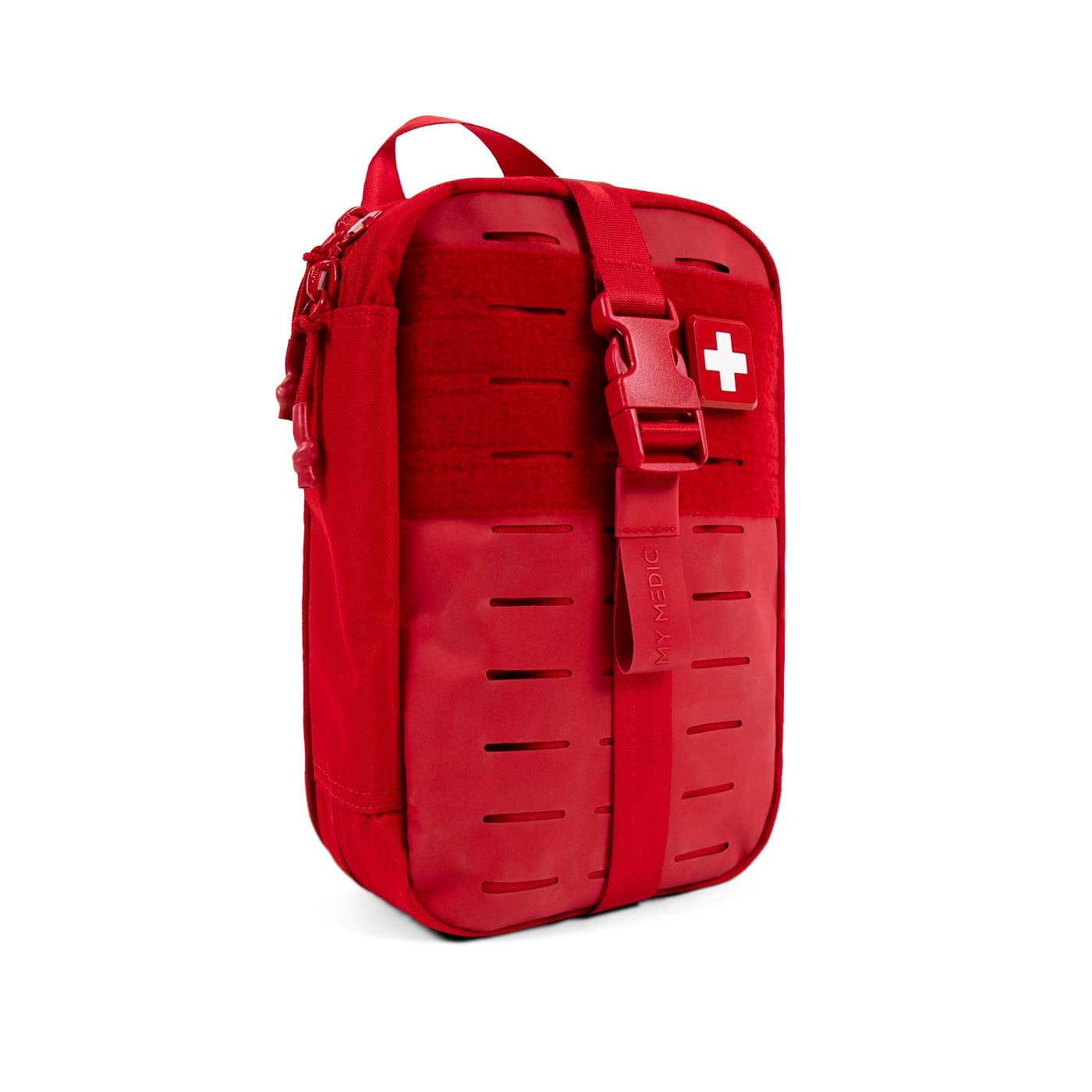
MyMedic MyFAK First Aid Kit
Evaluated for household use · Affiliate links disclosed
A serious first-aid base for real emergencies — trauma-ready once you add a tourniquet
Why we chose it
A genuinely comprehensive first-aid base with name-brand trauma supplies, organized so you can find them under stress — add a CoTCCC tourniquet (a CAT) and it's trauma-ready.
Buy From
My MedicAffiliate links · We earn a small commission at no cost to you. How this works
We evaluate every pick for real-world reliability.
Why this matters
Why this matters in an emergency
Most of the time, first aid means a bandage and a kind word. But once in a great while, it means stopping bleeding that won't stop — a deep cut from a chainsaw clearing storm debris, a bad fall, a car accident on a road where the ambulance is twenty minutes out, or longer when the weather's bad and lines are down. Those are the minutes that decide outcomes, and an ordinary drugstore kit has nothing for them.
The MyMedic MyFAK is built to close that gap: it carries trauma dressings, hemostatic gauze, and a compression bandage alongside the everyday supplies, organized so you can find what you need with shaking hands. It has one important gap of its own — the Standard doesn't include a tourniquet, the single most critical piece for serious limb bleeding — so making it truly trauma-ready means adding one (more on that below). It's not the kit you reach for over a paper cut. It's the base you build into something you're desperately glad to have on the one day something is genuinely wrong and help isn't close.
How We Evaluated
How we evaluated this
We researched this the way a trauma-capable kit deserves: by checking that the components that define one are real, not padding. We inventoried the MyFAK Standard against its contents list — trauma dressings, a compression bandage, hemostatic gauze, and a deep set of everyday first-aid supplies — and confirmed these are recognizable, name-brand items, not no-name substitutes. The most important finding: the Standard does not include a tourniquet, the single most critical piece for life-threatening limb bleeding. For real trauma readiness you add one — and not just any one. The American College of Surgeons' Stop the Bleed course teaches the windlass-style CAT; in a controlled ACS bleeding-control trial, laypeople applied the CAT correctly about 92% of the time versus roughly 12% for the elastic RATS-style band. So the honest guidance is simple: add a CoTCCC-recommended tourniquet (a CAT or SOF®TT-W) to the Standard, or step up to the MyFAK Pro, which ships with a tourniquet — a RATS-style one, itself worth pairing with or upgrading to a CAT.
Then we read widely through verified owner reviews and the discussion among people that carry trauma kits seriously — the strong organization and clear labeling, and the recurring criticism that it ships without much instruction. We haven't used it on an injury — but between the verified contents and that experienced-user feedback, we can tell you exactly what this kit is, what it's missing, and how to make it genuinely trauma-ready, with the honest caveat that gear like this works only in trained hands.
Our pick: MyMedic MyFAK First Aid Kit
The verdict
A serious first-aid base for the minutes before EMS arrives, not just scrapes. Its trauma dressings and hemostatic gauze put it well beyond a box of bandages — add a CoTCCC tourniquet (a CAT) and it becomes genuinely trauma-ready.
- Genuine trauma components (dressings, hemostatic gauze), not drugstore filler
- Clear organization — findable under stress
- HSA/FSA-eligible
- No tourniquet included — must add a CAT for true trauma readiness
- No instruction manual for untrained users
- Pricier than pharmacy kits
What it does well
The MyFAK Standard is a genuinely comprehensive first-aid base, and that's its strength. Where a drugstore kit stops at minor-injury supplies, this one adds the gear that matters when bleeding is serious: trauma dressings, a compression bandage, and hemostatic gauze, alongside the everyday bandages, wipes, and tools. There's one deliberate gap to know going in — the Standard does not ship with a tourniquet (that's a Pro-only item), and a tourniquet is the single most important tool for life-threatening limb bleeding. So out of the box it covers the blister and much of the bleed, but not the worst-case limb hemorrhage until you add a tourniquet (below).
The execution is strong: the components are genuine, name-brand items rather than cheap stand-ins, laid out and clearly labeled in a durable, well-organized case, so you can find what you need fast and under stress — the organization is something owners consistently praise. At a manageable size and weight, it works as a home kit, a vehicle kit, or a serious go-bag addition. Add the tourniquet it's missing and, for a household that wants real emergency capability, it's a well-built, trustworthy base.
What it does poorly
Two honest gaps. First, the one that matters most: the Standard doesn't ship with a tourniquet — the piece you'd most want for a serious bleed — so on its own it isn't trauma-complete. The fix is straightforward and worth doing: add a CoTCCC-recommended CAT, or buy the Pro, which ships with a tourniquet (a RATS-style band; for limb bleeding the windlass-style CAT is the more reliable, widely-taught choice, so many people add or swap to one). Second is training: the kit ships with limited instruction, and trauma gear is only as good as the hands using it — a tourniquet applied wrong, too late, or hesitantly doesn't help, and most people have never been taught. Pair the kit with a free 'Stop the Bleed' class. It's also pricier than a basic kit, fair for what it includes but overkill if all you ever treat is scrapes; and the consumables expire and need restocking.
Where it shines
Households that want genuine emergency capability — rural homes far from an ambulance, anyone that works with tools or machinery, anyone that wants to be able to actually help at a car accident, especially once they've added a tourniquet and the training to use it. It's the kit that matters on the rare, serious day, and it covers the everyday injuries too.
Where it frustrates
If you buy it expecting a complete trauma kit out of the box, the missing tourniquet and the lack of instruction will both leave gaps — this kit needs you to add the tourniquet and bring the training. And for someone that only ever needs a bandage, the price and the trauma supplies are more than the situation calls for. Matched to a household that wants real capability and is willing to add the last piece and learn, it delivers.
Other options to consider
Johnson & Johnson 160-piece kit
The baseline kit — what the MyFAK builds on, not a rival. The J&J kit handles everyday cuts and burns cheaply, but has nothing for serious bleeding. Most households should own both: the basic kit for the constant minor stuff, the MyFAK for the rare emergency. Choose the MyFAK when you specifically want trauma capability the baseline can't provide.
Read full review →Building a trauma kit from individual components
Often cheaper, and lets you choose your own tourniquet. Experienced users sometimes assemble a kit around a preferred tourniquet (like a genuine CAT) and known-good components, which can cost less and suit training better. The trade is the time, knowledge, and organization the MyFAK provides out of the box. For most people, the ready-made, well-organized kit is worth it; for the trained, DIY is viable.
A basic 'first aid + CPR' kit with no trauma gear
Common, comforting, and not enough for the worst case. Plenty of mid-size kits look thorough but contain only minor-injury supplies dressed up with a high piece count. If trauma capability is your goal, confirm a real tourniquet and bleeding-control gear are actually inside — many aren't. The MyFAK's value is that those serious components are genuinely there.
Longevity
How long will this actually last
A trauma kit's longevity is a tale of two halves. The durable parts — the case and the tools — last for years and shrug off being stored or carried. The consumables don't: gauze and dressings, antiseptics, and especially any hemostatic agents have firm expiration dates, and an expired hemostatic or a degraded dressing isn't something to gamble on in a real bleed. So the maintenance is a periodic audit — once or twice a year, open the kit, check every dated item, and replace what's expired or used. MyMedic sells refill packs, or you can restock components individually.
Two specifics matter: the tourniquet you add should be inspected for cracked plastic or a frayed strap and replaced if it's been used in a real or practice application (a tourniquet that's been cinched hard once isn't reliable for the next time), and the whole kit should be stored out of extreme heat, which ages medications and rubber components fastest. Keep it climate-controlled, audit it on a schedule, and the kit itself endures for many years while its perishable contents cycle through. As with any first aid gear, a forgotten, expired trauma kit is a false sense of security — the upkeep is the point.
Questions people actually ask
What makes this different from a regular first aid kit?
Do I need training to use it?
Is it overkill for a normal family?
How do I keep it ready?
Where should I keep it?
Technical Specifications
| Case | Durable nylon |
| Includes Tourniquet | No — Pro only |
Sources we consulted
We may earn a commission when you buy through links on this page. How this works
Preparedness Gear
MyMedic MyFAK First Aid Kit
Evaluated for household use · Affiliate links disclosed
A serious first-aid base for real emergencies — trauma-ready once you add a tourniquet
Why we chose it
A genuinely comprehensive first-aid base with name-brand trauma supplies, organized so you can find them under stress — add a CoTCCC tourniquet (a CAT) and it's trauma-ready.
Buy From
My MedicAffiliate links · We earn a small commission at no cost to you. How this works
We evaluate every pick for real-world reliability.