Who this is for
Connecting refrigerators, heaters, or appliances to an outdoor gas generator or battery power station.
Skip if
Permanent home wiring installations.
Preparedness Gear
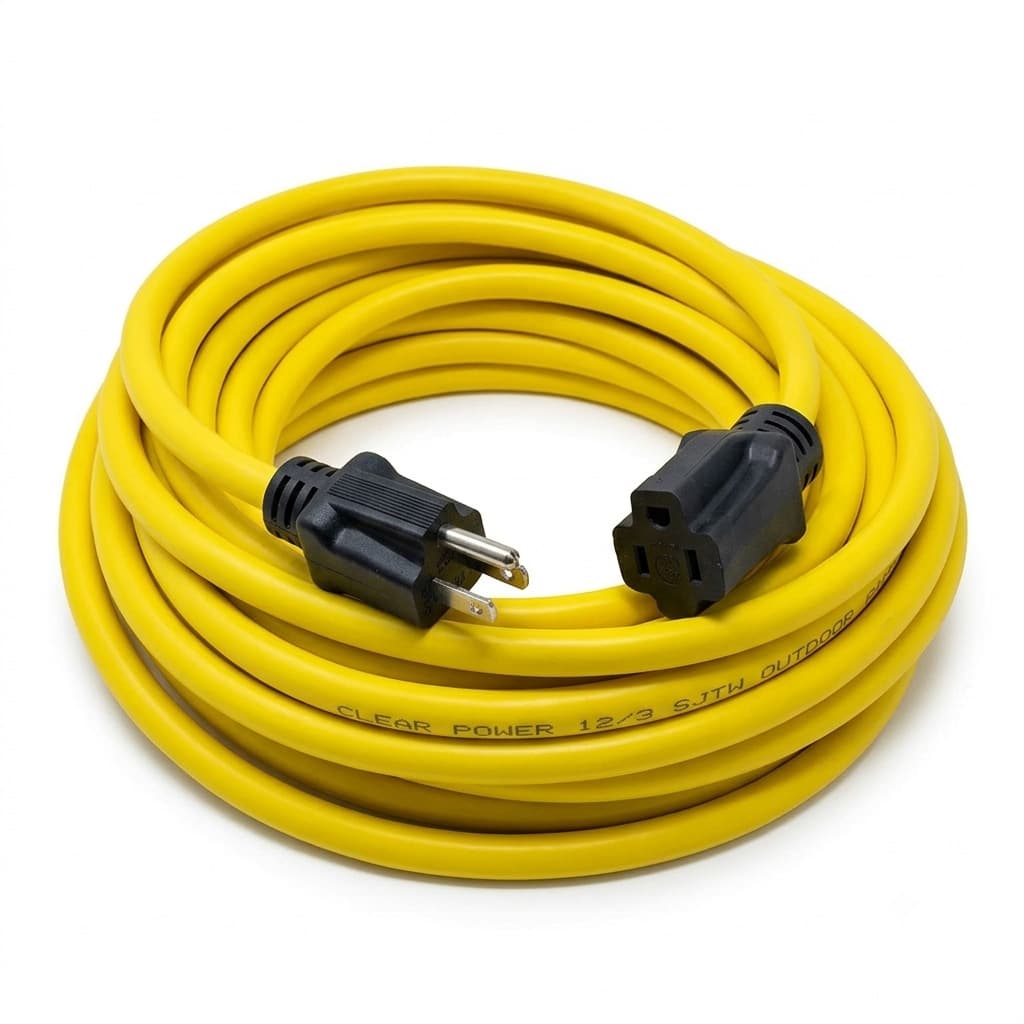
Clear Power 12/3 Heavy Duty Extension Cord (50 ft)
Evaluated for household use · Affiliate links disclosed
Heavy-duty 12-gauge cord rated for generator loads
Why we chose it
Safety is paramount with generators. This 12-gauge cord is rated for high wattage, preventing dangerous overheating and voltage drops common with standard household cords.
Buy From
Home DepotAffiliate links · We earn a small commission at no cost to you. How this works
We evaluate every pick for real-world reliability.
Why this matters
Why this matters in an emergency
Here's a quiet danger people don't see coming: you finally get a generator or a power station running during an outage, you grab the household extension cord from the junk drawer to reach the fridge — and that thin cord becomes a fire risk. A standard lamp cord isn't built to carry the current a refrigerator or a space heater pulls. Run too much through it and it heats up inside the insulation, where you can't see it, until it melts or sparks.
A proper heavy-gauge cord is the unglamorous link that makes the rest of your backup power actually safe. The Clear Power 12/3 is a 50-foot, 12-gauge cord rated to carry a full 15 amps — enough to run a fridge, a heater, or a pump from a generator parked safely outside, or from a power station across the room, without the wire ever getting warm. It's the cheapest piece of safety gear in your outage kit, and the one most people forget until something smells hot.
How We Evaluated
How we evaluated this
We researched this the way you should vet anything that carries real current: against the spec sheet, the ETL listing, and what owners report after living with it. We confirmed the things that actually matter on a cord like this — the 12-gauge (12/3) wire, the 15-amp / 1,875-watt rating, and the weather-resistant, flame-retardant jacket — and checked that the published numbers match the ETL (Intertek) certification, which is the part you never skip on anything carrying this much power. We also cross-referenced electrical-safety guidance from sources like the NFPA and generator manufacturers on why gauge and length matter together.
Then we read widely through verified owner reviews for the failure stories that tell you where a cord really stands: connectors that loosen, jackets that crack in the cold, the lighted end that stops lighting. For an ETL-listed cord the rating is the rating, so the value here isn't a number we measured — it's knowing which corners this cord does and doesn't cut, and how to use it safely, which matters more on a power cord than any figure we could read off a meter.
Our pick: Clear Power 12/3 Heavy Duty Extension Cord (50 ft)
The verdict
Never use thin household extension cords with a generator. This 12-gauge heavy-duty cord is the baseline requirement for safely routing generator power into your house.
What it does well
The whole job of this cord is to carry real current without getting hot, and the 12-gauge copper inside is what lets it. Gauge is counterintuitive — a lower number means thicker wire — so 12-gauge is meaningfully beefier than the 14- or 16-gauge cords most people own. That thickness is rated to carry a full 15 amps, or 1,875 watts, across the whole 50-foot length without a dangerous voltage drop or heat buildup. In practice that means you can run a refrigerator, a box fan, a sump pump, or a space heater off a generator outside and trust the cord between them.
The details are sensible. It's ETL listed (Intertek), the kind of third-party safety certification you actually want on anything carrying this much power. The jacket is weather-resistant and flame-retardant for outdoor generator use, the molded plugs are oversized so they're easy to grip and resist strain, and there's a lighted end so you can see at a glance that power is flowing — genuinely useful in a dark, stressful moment. Fifty feet is enough to keep a gas generator the safe 20-plus feet from the house with room to spare.
What it does poorly
There's not much to dislike, but be realistic. A 12-gauge cord is heavy and stiff, and it gets stiffer and harder to coil in freezing weather — exactly when you might be using it. The bright safety-yellow jacket is intentional and good for not tripping over it, but it's not subtle. And a cord is only as safe as how you use it: this is for temporary outage power, not permanent wiring, and it should never be run under a rug or through a doorway that pinches it.
Where it shines
Bridging a generator outside to the appliances inside, safely. It's the piece that lets the rest of your power setup do its job without becoming a hazard — and at its price, there's no reason to risk a thinner cord.
Where it frustrates
Its weight and stiffness make it a bit of a wrestling match to coil and store, especially in the cold. That's the price of the thick copper that makes it safe — a fair trade, but worth knowing before you expect it to wind up neatly like a lamp cord.
Other options to consider
A standard 16-gauge household extension cord
The one already in your drawer — and the one to keep away from your generator. A 16-gauge cord can't safely carry the current a fridge or heater pulls; run that load through it and it overheats inside the insulation. It's fine for a lamp, dangerous for an appliance. This is the exact mistake the heavy cord exists to prevent.
A 10-gauge (10/3) heavy-duty cord
Even thicker wire, for higher loads or longer runs. If you're running very high-draw gear or need a cord well past 50 feet, stepping up to 10-gauge is the right move — several brands make 10-gauge cords. For most household outage loads at 50 feet, the 12-gauge is the sweet spot; the 10-gauge is heavier and pricier than most people need.
A flat 14-gauge 'low-profile' cord
Tempting for running under a door, but underbuilt for this job. Low-profile cords are usually 14- or 16-gauge and meant for light electronics, not appliances. The convenience isn't worth the reduced capacity when you're powering a fridge or pump. Get the 12-gauge and route it safely instead.
Longevity
How long will this actually last
A heavy extension cord is about as durable as household gear gets — there's no battery to degrade and no electronics to fail, just copper, insulation, and plugs. Treated reasonably, this cord will outlast most of the things you plug into it. What actually wears out is the jacket and the connectors: repeated dragging over concrete abrades the insulation, and freezing temperatures make the jacket brittle, so the failure you watch for is a nick, crack, or cut that exposes the wire inside.
Inspect the whole length now and then, and retire it if you ever see copper or feel a plug getting warm in use. Store it loosely coiled — tight, kinked winding stresses the wire over time — and keep it out of standing water and direct sun, both of which age the jacket. The lighted end uses a tiny indicator that may eventually dim, but that's cosmetic. Coil it gently, keep it dry, and check it once a season, and a cord like this is genuinely a buy-it-once item.
Questions people actually ask
Why can't I just use a regular extension cord with my generator?
What can I run on a 12-gauge, 15-amp cord?
Can I run this cord through a window or under a door to reach my generator?
Is it safe to leave it outside in the rain?
Does the 50-foot length reduce how much power it can deliver?
Technical Specifications
| Gauge | 12/3 AWG |
| Length | 50 feet |
| Rating | 125V, 15A, 1875W |
| Certification | ETL Listed (Intertek) |
Sources we consulted
We may earn a commission when you buy through links on this page. How this works
Preparedness Gear
Clear Power 12/3 Heavy Duty Extension Cord (50 ft)
Evaluated for household use · Affiliate links disclosed
Heavy-duty 12-gauge cord rated for generator loads
Why we chose it
Safety is paramount with generators. This 12-gauge cord is rated for high wattage, preventing dangerous overheating and voltage drops common with standard household cords.
Buy From
Home DepotAffiliate links · We earn a small commission at no cost to you. How this works
We evaluate every pick for real-world reliability.