Skip if
Being your household's only emergency radio. It has no automatic NOAA alert (confirmed), the controls are the weak point, and similarly priced radios pack more polish.
How We Evaluated
How we evaluated this
We researched the MD-090P, not tested it — we don't have hands-on time with this unit. What you read here is drawn from three kinds of sources, each labeled: the manufacturer's own MD-090P owner's manual for the specs, Bob Vila's hands-on comparative test for the measured performance, and a mix of owner-aggregate reports and one hands-on owner review for what holds up and what doesn't.
Two notes. First, we pinned the exact model on purpose: this is the MD-090P, the 4,000mAh 2021 release — not the older MD-090 (a 2,000mAh model) or the 6,000mAh and MD-097 variants — and we checked the specs against the manual that names it. Second, the brand now also sells under the DaringSnail name; it's the same triangular radio, so search either name and match the model number. Price moves around on budget radios, so we've left the current number flagged rather than stated.
Our pick: RunningSnail MD-090P Emergency Crank Radio
The verdict
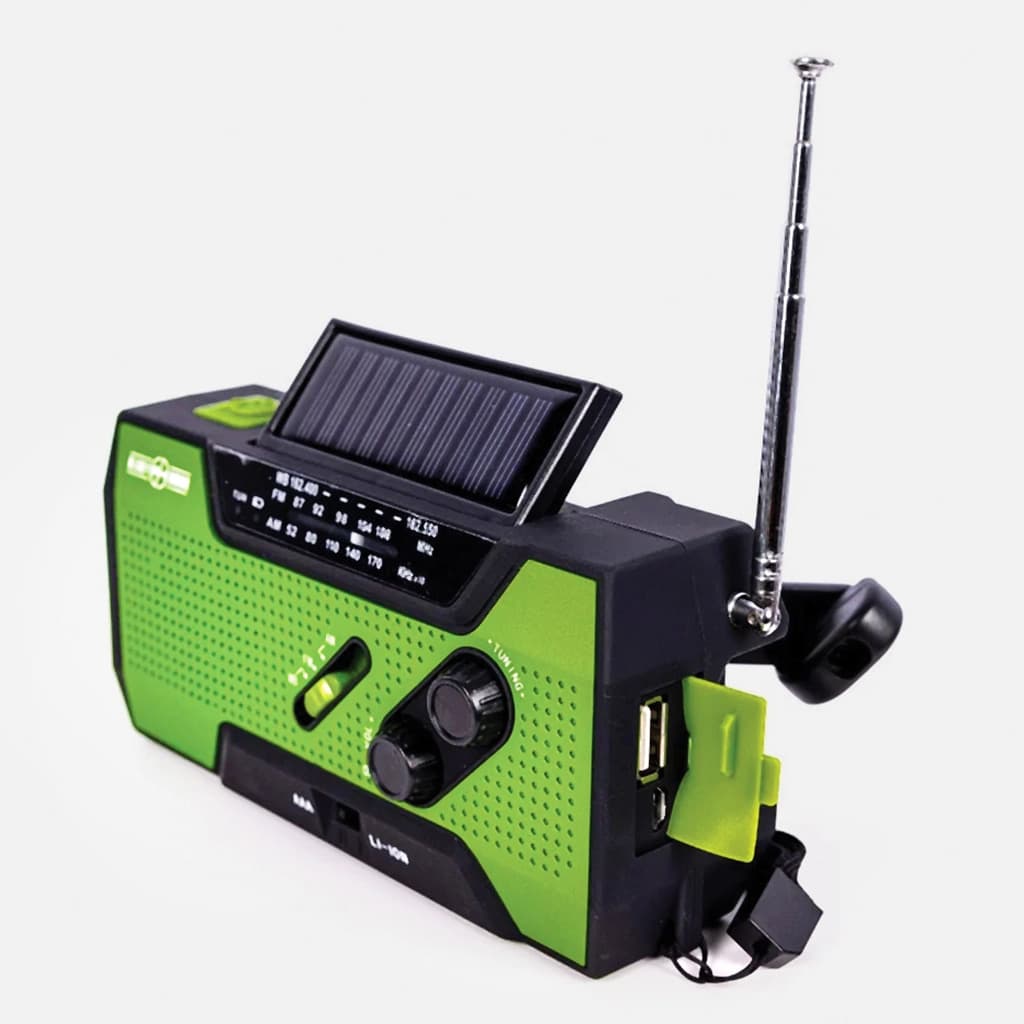
Here's both halves, because this radio earns both. The good half comes from Bob Vila's hands-on test of eight crank radios: the MD-090P's NOAA reception scored 5 out of 5, tied for the most stations picked up; sound landed at 4 of 5; the 4,000mAh battery ran about 20 hours of radio per charge; and they named it Best Overall, "definitely worth the money." For a budget radio, pulling in the weather band cleanly is the whole job, and this one does it. The other half: this is a budget unit and it shows in the right places. The control knobs, in testing, "moved stiffly and somewhat inconsistently." And we can now settle the question the category's marketing usually blurs — it has no automatic weather alert. Bob Vila lists "No NOAA Weather Alert feature" as a weakness, and the manufacturer's own manual describes only a manual SOS siren and a weather band you tune by hand. So it won't wake you for a warning the way an alerting radio will (see What owners report for the rest). Both halves are true. The MD-090P is a genuinely good cheap backup radio and a poor only-radio. Buy it as the spare it is, behind a radio that alerts — our tested pick, the Midland ER310.
Why We Chose This
Independent testing surprised us: 5 out of 5 for NOAA reception and a verdict of "worth the money." For a backup radio at this price, the honest case writes itself — both halves of it.
What owners report
These come from owner-aggregate reports, a hands-on owner review, and Bob Vila's testing — not from our own bench. Prevalence language is deliberately careful.
- Solar is slow, and weakest in the clouds — right when you need it. Bob Vila measured about six hours of direct sun for roughly five hours of runtime; an owner-aggregate flags the panel as "largely ineffective" in overcast conditions, and one hands-on owner preferred the crank as "faster and more reliable." Treat solar as a slow top-off, not a primary fill.
- The crank is real work for modest return. In testing, about a minute of hard cranking (two to three rotations a second) bought roughly ten minutes of runtime; owners echo needing ten-plus minutes of cranking for a meaningful charge. It works — it's also a workout.
- Charging a phone drains the radio fast. A hands-on owner found that topping up a phone "drained the battery fairly quickly" (cranking brought it back), and an owner-aggregate calls the USB output slow with larger phones. Think emergency top-off, not a phone bank.
- Battery capacity fades in long storage. Owner-aggregate reports note capacity dropping noticeably after 12 to 18 months in stored or inactive units — in line with the 18-month warranty. The fix is a habit: recharge it on a schedule so it's ready.
- The knobs are the weak point. Bob Vila found the control knobs "modest quality" and "stiff and inconsistent." On budget electronics, the part that frustrates first often fails first — and here that's the tuning controls.
- The flashlight is fine up close, thin for big dark spaces. Some owners call the 135-lumen light insufficient for large or very dark areas; one hands-on owner found it plenty bright at arm's length. Keep a real flashlight nearby either way.
- It's splash-rated, not weatherproof. The manufacturer rates it IPX3 — it shrugs off spray, not rain exposure or a dunk. Don't leave it out in a storm.
Other options to consider
Midland ER310
Our hands-on tested comms pick — automatic NOAA alert scan, a bigger battery, and the polish this radio trades away. The right primary; the MD-090P backs it up. Read the full review.
Read full review →Midland ER210
The compact Midland — automatic NOAA alerting in a smaller, cheaper body than the ER310, reviewed separately. The middle path between this budget spare and the full ER310.
Read full review →
Technical Specifications
| Radio & Alert | AM/FM + NOAA weather band (162.400–162.550MHz), manual tune; no automatic alert, manual SOS siren only (mfr manual; Bob Vila test) |
| Battery & Runtime | 4,000mAh Li-ion; ~20 hrs radio per charge (mfr spec; Bob Vila measured ~20 hrs) |
| Tested Reception | NOAA 5/5 — tied for most stations picked up; sound 4/5 (Bob Vila hands-on test of 8 radios) |