Who this is for
Every household with a fridge and freezer, as a baseline check during and after an outage.
Skip if
Anyone needing to know how long the fridge was too warm without opening the door; it has no memory.
Preparedness Gear
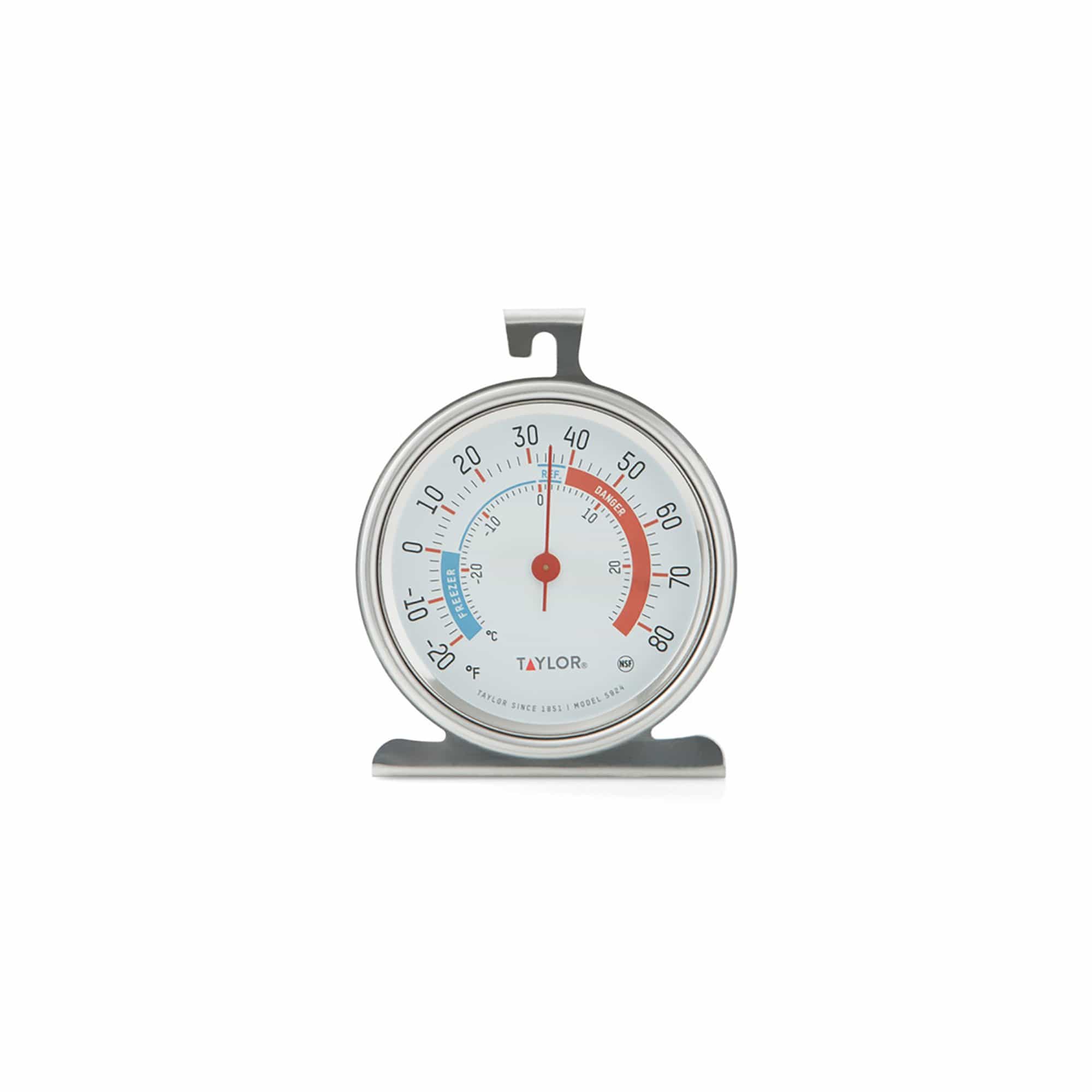
Taylor 5924 Refrigerator/Freezer Dial Thermometer
Evaluated for household use · Affiliate links disclosed
A reliable option for most households
Why we chose it
It's the simple answer to "is the food still safe?": no batteries, NSF certified per Taylor, and a dial marked with safe zones.
Buy From
AmazonAlso available at
Affiliate links · We earn a small commission at no cost to you. How this works
We evaluate every pick for real-world reliability.
Why this matters
Why this matters in an emergency
When the power's out, the question about the food in the fridge is a number, not a feeling. The FDA says to keep the fridge at or below 40°F and the freezer at or below 0°F, and to keep a thermometer in each so you can tell whether the food is safe. "It still feels cold" is a guess. A thermometer turns it into an answer.
That answer matters most when the power comes back. The FDA says an unopened fridge keeps food cold for about 4 hours, and a full freezer for about 48. If the freezer thermometer reads 40°F or below when power returns, the FDA says the food is safe and can be refrozen. You can't rely on how food looks or smells, per the FDA. A thermometer you already own is how you know.
How We Evaluated
How we evaluated this
We researched the Taylor 5924 the way we'd check it before buying one for our own kitchen: Taylor's own product page, the Amazon listing (sold by Amazon) for its specs, and verified owner reviews for how accurate it is in real kitchens. The food-safety lines come from the FDA and Ready.gov. We don't have hands-on time with it yet, so every figure is attributed.
Our pick: Taylor 5924 Refrigerator/Freezer Dial Thermometer
The verdict
The Taylor 5924 is a reliable option for most households: a cheap dial thermometer that tells you whether your fridge is at or below 40°F and your freezer at or below 0°F, the lines the FDA uses. It needs no batteries, Taylor lists it as NSF certified, and the 3-inch dial is marked with safe zones. Two honest limits: it doesn't remember the warmest temperature it saw, so you read it when you open the door, and owners report individual units reading a few degrees off. Check yours against a second thermometer before you rely on it.
- No batteries
- Large dial with safe-zone markings
- NSF certified, per Taylor
- Units can read a few degrees off
- No memory of the warmest reading
- You open the door to read it
What it does well
It's simple, and simple is what you want in an outage. It's a dial, so it needs no batteries. Taylor lists a 3-inch dial with safe-zone markings, and it hangs from a shelf or stands on its own. Taylor lists it as NSF certified. The Amazon listing gives its range as -20 to 80°F, which covers both a freezer and a fridge, and a stainless steel case.
What it does poorly
Accuracy varies from one unit to the next. Several verified owners on Amazon report theirs reading 2 to 8 degrees off when they checked it against other thermometers. Taylor's page states no accuracy figure. It also has no memory: it shows the temperature now, not the warmest it got while you were away, and you have to open the door to read it.
Where it shines
Everyday peace of mind, plus a quick check during and after an outage. Hang one in the fridge and one in the freezer and you'll know your normal readings, which makes a problem obvious.
Where it frustrates
If you want to know how long the fridge sat above 40°F without opening the door, this can't tell you. Digital thermometers with a min/max memory and an outside display can, at a higher cost.
What owners report
The clearest pattern in verified Amazon reviews is unit-to-unit accuracy. Owners report readings 2 to 8 degrees off from their other thermometers, and one bought two that read 2 degrees apart side by side. Others praise the large, easy-to-read dial. The practical fix is the one above: check yours before you trust it.
Other options to consider
A digital fridge thermometer with min/max memory
Shows the warmest temperature reached while you were away, and some also record how long it stayed too warm, without opening the door. More to set up, and it needs batteries.
Longevity
How long will this actually last
There's nothing to charge and nothing to wear out but the dial itself. The Amazon listing says to hand wash it and keep it out of the dishwasher. Check it once a year against a second thermometer, or in a glass of ice water, which should read about 32°F. If it reads off, note the difference and allow for it. The Amazon listing gives a one-year warranty.
Questions people actually ask
Where should I put it?
How do I know if my food is still safe after an outage?
Can I refreeze food from the freezer?
How accurate is it?
Does it need batteries?
Technical Specifications
| Type | Mechanical dial; no batteries |
| Dial | 3 in, with safe-zone markings (Taylor) |
| Range | -20 to 80°F (Amazon listing) |
| Mounting | Hangs or stands (Taylor) |
| Certification | NSF certified (Taylor) |
| Case | Stainless steel (Amazon listing) |
| Accuracy | Not stated by Taylor |
| Care | Hand wash; not dishwasher safe (Amazon listing) |
| Warranty | 1 year (Amazon listing) |
Sources we consulted
We may earn a commission when you buy through links on this page. How this works
Preparedness Gear
Taylor 5924 Refrigerator/Freezer Dial Thermometer
Evaluated for household use · Affiliate links disclosed
A reliable option for most households
Why we chose it
It's the simple answer to "is the food still safe?": no batteries, NSF certified per Taylor, and a dial marked with safe zones.
Buy From
AmazonAlso available at
Affiliate links · We earn a small commission at no cost to you. How this works
We evaluate every pick for real-world reliability.