Who this is for
Apartment dwellers and larger homes needing 72-hour emergency backup for refrigeration, phones, and lights.
Skip if
Whole-house heating or running high-draw 240V appliances like well pumps.
Preparedness Gear
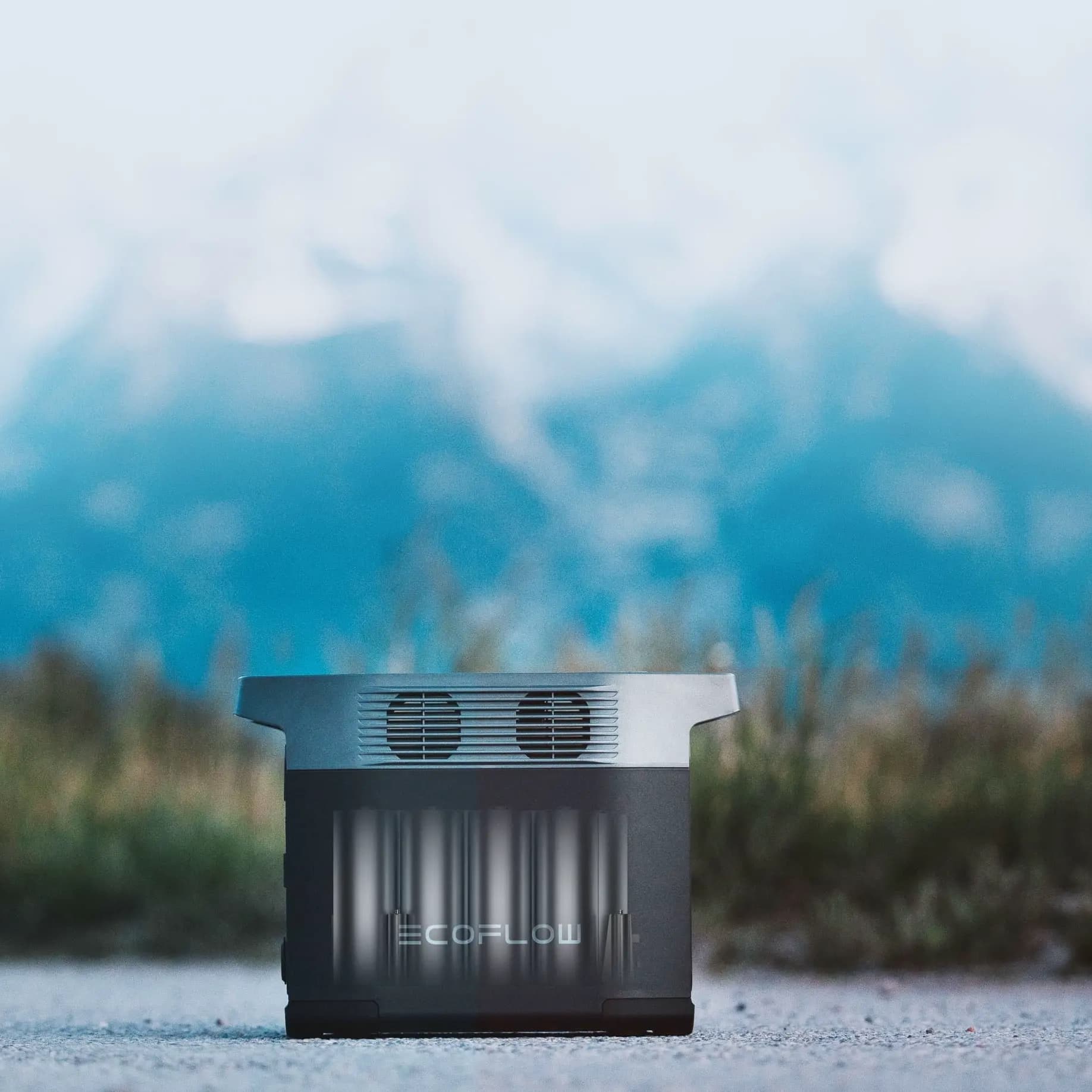
EcoFlow DELTA 2 Portable Power Station
Evaluated for household use · Affiliate links disclosed
A reliable option for most households
Why we chose it
The DELTA 2 balances fast charging, safe indoor chemistry, and expandable capacity — with plug-and-play solar readiness when you want to add panels.
Buy From
EcoFlowAffiliate links · We earn a small commission at no cost to you. How this works
We evaluate every pick for real-world reliability.
Why this matters
Why this matters in an emergency
Picture it: the power goes out at 11pm on a January night, the house is already cooling off, and there's a four-year-old asleep down the hall who's going to wake up confused and cold. Or it's August, the AC just quit, and the insulin in the fridge has a clock on it now. These are the moments a power station is actually for — not the end of the world, just a long, dark, uncomfortable stretch you'd rather handle calmly.
The Delta 2 won't run your whole house, and we won't pretend it does. What it will do is keep the fridge cold, your phones charged, a lamp on, and a medical device running — indoors, with no fumes and no trip to the garage to wrestle a gas generator to life. For an apartment or a townhome, where a generator isn't even an option, that's the difference between a manageable night and a miserable one. It gives back the first thing every outage takes away: a little control.
How We Evaluated
How we evaluated this
We researched the Delta 2 the same way we'd vet it before buying one for our own house: we took EcoFlow's published specs and checked them against independent bench testing from reviewers who measure these units under load. EcoFlow lists a 1,024-watt-hour LFP battery, 1,800 watts of continuous output, and a fast wall charge. Independent testing backs the shape of that — StorageReview measured about 0.85 kilowatt-hours of usable energy out of the 1,024 on the label, roughly 83 percent efficiency under a steady 270-watt load, and CleanTechnica recharged a fully drained unit in just under an hour from a wall outlet, pulling around 1,170 watts.
We don't have hands-on time with this exact unit yet, so every figure here is attributed: the capacity, chemistry, output, and charge-time specs come from EcoFlow; the usable-capacity and recharge measurements come from the independent testers named above. Where a spec and a real-world test disagree, we tell you both rather than splitting the difference. When we get one on our own bench, we'll add what we measure.
Our pick: EcoFlow DELTA 2 Portable Power Station
The verdict
The EcoFlow Delta 2 is a reliable option for most households — a safe, indoor-friendly LFP battery station that charges fast, expands when your needs grow, and is backed for five years. It's now the previous generation, with EcoFlow's Delta 3 series sitting above it as the current line, but that's exactly why it stays appealing: a proven, known-good unit at a friendlier outlay than the newest model. If you want a calm, no-fumes way to keep the essentials running through a long outage, it still earns the pick.
What it does well
The Delta 2 nails the thing that matters at 2am: it's a battery, not an engine. Its core is lithium iron phosphate — LFP — the safe, long-lived chemistry, and because it doesn't burn anything, it can sit in a bedroom or a closet and run. That alone makes it usable in an apartment, where a gas generator isn't an option. The numbers are honest, too: 1,024 watt-hours of capacity and 1,800 watts of continuous output, with up to 2,200 watts on tap through its X-Boost mode and a 2,700-watt surge for the brief spike a high-draw motor pulls when it kicks on. In one independent test it held about 1,500 watts almost constantly for nearly 45 minutes. And it refills fast — EcoFlow rates it at zero to 80 percent in about 50 minutes and a full charge in around 80, and an independent test recharged a drained unit in just under an hour from the wall.
What it does poorly
It is not a whole-house solution, and it's only fair to say so. Independent testing pulled about 0.85 kilowatt-hours of usable energy out of it at a steady load — roughly 83 percent of the 1,024 on the label — so a high-draw load doesn't last long here. The same test held about 1,500 watts for nearly 45 minutes, which tells you two things: it can push real power, and a space-heater-class load will work through that battery quickly. It won't touch central air, electric heat, or a well pump. At 27 pounds it's a two-handed lift — more loaded carry-on than backpack — so it lives in a closet, not a go-bag. And to recharge off-grid you'll need solar panels, so factor those into your plan.
Where it shines
A multi-hour to overnight outage in a home where a generator isn't an option. It runs clean and safe indoors, with nothing to refuel and no exhaust to vent. You can refill it from the wall or from the sun — an independent test brought a drained unit back to full in roughly three hours of good light using about 400 to 500 watts of panels, so a sunny afternoon can buy you another night. And if your needs grow, it expands: EcoFlow's add-on Smart Extra Battery takes it from around 1 kilowatt-hour up to about 3, so you can start with the base unit and build on it later instead of buying a whole new system.
Where it frustrates
Ask it to heat or cool a room and you'll watch the usable hours fall away — that's physics, not a flaw, but it surprises people that expected generator-style endurance. Lean on it for days off-grid without panels and you'll be rationing. And if you hoped to carry it any distance, those 27 pounds will change your mind. Match it to what it's built for — keeping the essentials alive through a long, dark stretch — and it rarely lets you down.
A note on which generation this is
EcoFlow's newer Delta 3 series is the current line — the Delta 3 Classic began shipping around March 2026 — and it steps things up with a higher surge ceiling and newer LFP cells. EcoFlow rates the Delta 3 series battery at about 4,000 charge cycles to 80 percent capacity, versus roughly 3,000 for the Delta 2, though those are EcoFlow's own figures and not numbers we've independently verified.
Other options to consider
Jackery Explorer 1000 v2
A lighter, simpler unit that's easy to like — and it runs on the same long-lived LFP battery as the Delta 2, so it's just as much a keep-it-for-years pick. The real tradeoff isn't how long it lasts. It's that the Delta 2 recharges faster and lets you add capacity later, while the Jackery wins on lighter weight and a simpler, grab-and-go feel. If you want the lightest option and don't need to expand, it's a solid choice.
Read full review →Anker SOLIX C1000
Honestly, the closest competitor — fast, LFP, and well-reviewed. It trades blows with the Delta 2 and would be an easy pick on a good sale. We give the edge to EcoFlow for the slightly clearer display and the wider, easier-to-find accessory lineup, but you won't go wrong with either.
Read full review →EcoFlow Delta 3 (the current generation)
The newer model in EcoFlow's line, worth a look if you want the latest. The Delta 3 series succeeded the Delta 2 as the current generation — the Delta 3 Classic began shipping around March 2026 — with a higher surge ceiling and newer LFP cells. EcoFlow rates the Delta 3 series battery at about 4,000 charge cycles to 80% capacity, versus roughly 3,000 for the Delta 2; both are EcoFlow's own series figures, which we haven't independently verified. The Delta 2 isn't beaten so much as succeeded: it's still sold and still a strong value, so the choice comes down to whether you want the newest design or a proven previous-gen unit for a friendlier outlay.
Read full review →
You might also like
Longevity
How long will this actually last
EcoFlow rates the Delta 2's LFP battery for around 3,000 full charge cycles to 80 percent of its original capacity — that's EcoFlow's own figure, which we haven't independently verified. Even cycling it once a week, that would put you well over a decade before it noticeably weakens.
There's almost nothing to maintain — no oil, no fuel to go stale, no annual service. To get the long life, store it around half-charged in a cool, dry spot and top it off every few months if it's sitting unused; a battery left dead for a year is a battery you've hurt. Skip the hot garage and the freezing shed, since temperature extremes shorten its life faster than everyday use does. Backed by a five-year warranty, it's a buy-it-once piece of gear that should outlast several gas generators.
Questions people actually ask
How long will the Delta 2 run my refrigerator?
Can I use it indoors?
What happens if it gets wet?
Is it worth it if I only lose power once or twice a year?
Can I add more capacity later?
Is the Delta 2 still current, or has it been replaced?
Technical Specifications
| Surge | 2700W |
| Output | 1800W |
| Weight | 27 lbs |
| Capacity | 1024Wh |
| Battery Type | LFP (LiFePO4) |
| Recharge Time | 0–80% in ~50 min (AC wall) |
Sources we consulted
We may earn a commission when you buy through links on this page. How this works
Preparedness Gear
EcoFlow DELTA 2 Portable Power Station
Evaluated for household use · Affiliate links disclosed
A reliable option for most households
Why we chose it
The DELTA 2 balances fast charging, safe indoor chemistry, and expandable capacity — with plug-and-play solar readiness when you want to add panels.
Buy From
EcoFlowAffiliate links · We earn a small commission at no cost to you. How this works
We evaluate every pick for real-world reliability.