Never heat the house with fuel-burning gearGenerators, grills, camp stoves and gas ovens stay out of the house, the basement and the garage, per the CDC. Run a generator outside, more than 20 feet from windows, doors and vents.
If the CO alarm sounds or anyone feels sickGet everyone into fresh air right away, per the Red Cross, then call 911. Headache, dizziness, weakness, nausea and confusion are the warning signs, per the CDC.
When the furnace quits in winter, the house doesn't go cold all at once. It cools a degree or two at a time, and that slow slide is your window to act. Most of what keeps a household safe here is free: one warm room, dripping faucets, and nothing that burns fuel inside the house. The real danger isn't the cold itself. It's the shortcuts people reach for when they're cold, like the oven, the grill or a generator by the door. Do the free steps first, keep a carbon monoxide alarm working, and know when it's time to go somewhere warm. If a big storm is coming, the winter storm guide covers getting ready before it hits.
First things first
What breaks first
01
The house cools a little every hour
With the heat off, your home slowly drifts toward the temperature outside. Good insulation buys hours, not days. Closing off the rooms you don't need slows it down, per the CDC.
02
Pipes can freeze
Pipes in basements, attics, garages and outside walls freeze first, per the Red Cross. A trickle from a faucet that should run full is often the first sign.
03
Cold pushes people toward dangerous heat
This is when people bring grills, camp stoves and generators inside, or run the gas oven for warmth. The CDC says never to. All of them make carbon monoxide, which you can't see or smell.
04
Some people chill much faster
Babies, older adults and anyone ill lose heat faster than a healthy adult. The CDC says babies under one should never sleep in a cold room.
Free to do now
Start with these — they cost nothing
You can do every one of these right now, with what's already in your home.
Pick one room and close off the rest — a small room with few windows holds heat best. The CDC says to close off rooms you don't need.
Block drafts — roll towels into the gaps under doors, and cover windows with blankets at night, per the CDC.
Let faucets drip — a slow drip and open cabinet doors under the sinks help keep pipes from freezing, per the CDC.
Layer up and keep eating — loose layers, hats and warm drinks help. The CDC says to skip alcohol and caffeine, which make your body lose heat faster.
Test your carbon monoxide alarm — press the test button now. The CDC says to have one near every sleeping area.
One page with tick boxes — print it or keep it on your phone. No account needed.
As time passes
What to do, hour by hour
First hour
Hold the heat you have
→Find out why: check the thermostat, the breaker and the furnace switch, and call your utility or a repair service.
→Close off unused rooms and move everyone into one room, per the CDC.
→Start the faucets dripping and open the cabinet doors under the sinks, per the CDC.
→Test the carbon monoxide alarm before anyone sleeps.
First day
Keep one room livable
→Cover the windows with blankets at night and keep the curtains closed, per the CDC and the National Weather Service.
→Dress everyone in loose layers and keep eating and drinking, per the National Weather Service.
→Use an electric space heater only if the power is on: plug it straight into the wall and keep it 3 feet from anything that burns, per the CDC and NFPA.
→Keep food in the fridge and freezer, not in the snow. The USDA says snow isn't a safe fridge.
If it lasts
Decide whether to stay
→If the house keeps getting colder, go to a warming center, library or mall, per the Red Cross.
→If you have a baby, the CDC says to stay somewhere warm rather than let them sleep in a cold room.
→Before you leave, the Red Cross says to keep the heat at 55°F or higher if you can, so pipes don't freeze while you're gone.
Know the line
When it's more than an inconvenience
When to call 911
→The carbon monoxide alarm goes off, or anyone has a headache, dizziness, nausea or confusion with fuel-burning gear nearby (per the CDC).
→Someone shows signs of hypothermia: shivering, confusion, slurred speech, fumbling hands or drowsiness. A body temperature below 95°F is an emergency, per the CDC.
→A baby has bright red, cold skin and very low energy, per the CDC.
When to leave
→The house can't be kept warm and you have a baby, an older adult or anyone ill at home (per the CDC).
→Someone relies on medical equipment that needs power, per the Red Cross.
→You smell gas: leave, then call the gas company or 911 from outside, per NFPA.
Extra care
If someone in your home is vulnerable
Babies under one. The CDC says a baby should never sleep in a cold room. If you can't keep the house warm, stay with family or friends. Watch for bright red, cold skin and very low energy.
Older adults. The CDC says people over 65 should check the temperature in their home often, since the body notices cold less with age. A neighbor's check-in helps.
Anyone using medical equipment. Oxygen concentrators and CPAPs stop when the power does. The Red Cross says to leave for somewhere with power if a device needs it.
Pets. Bring them into the warm room with you. They're safer inside with your family than in a garage or yard.
Worth knowing
Easy mistakes to avoid
01
Heating the house with the oven
A gas oven left open for warmth makes carbon monoxide. The CDC says never to heat your home with one.
02
Running a generator in the garage
Even with the door open, it isn't safe. The CDC says to run it outside, more than 20 feet from windows, doors and vents.
03
Thawing a pipe with a flame
The Red Cross says to use a hair dryer, heating pad or hot wet towels, never a torch or a propane heater, and to keep the faucet open while you thaw.
04
Plugging a space heater into an extension cord
Space heaters draw a lot of power. The CDC and NFPA say to plug them straight into the wall and turn them off when you leave the room or go to bed.
05
Putting food out in the snow
Sun warms it and animals find it. The USDA says not to. Keep the fridge and freezer shut instead: about 4 hours for the fridge and up to 48 for a full freezer.
If you want to be readier
Gear that helps in this situation
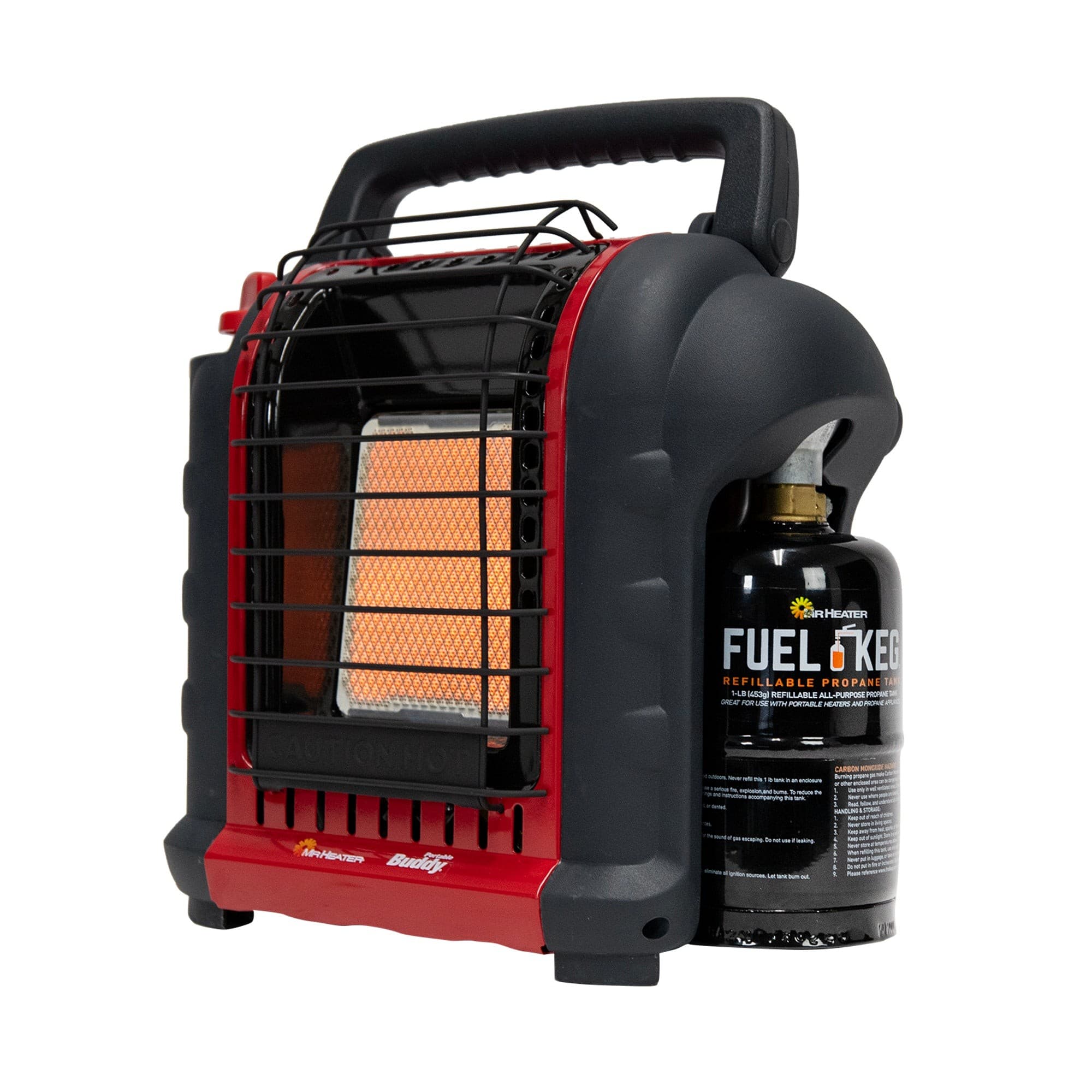
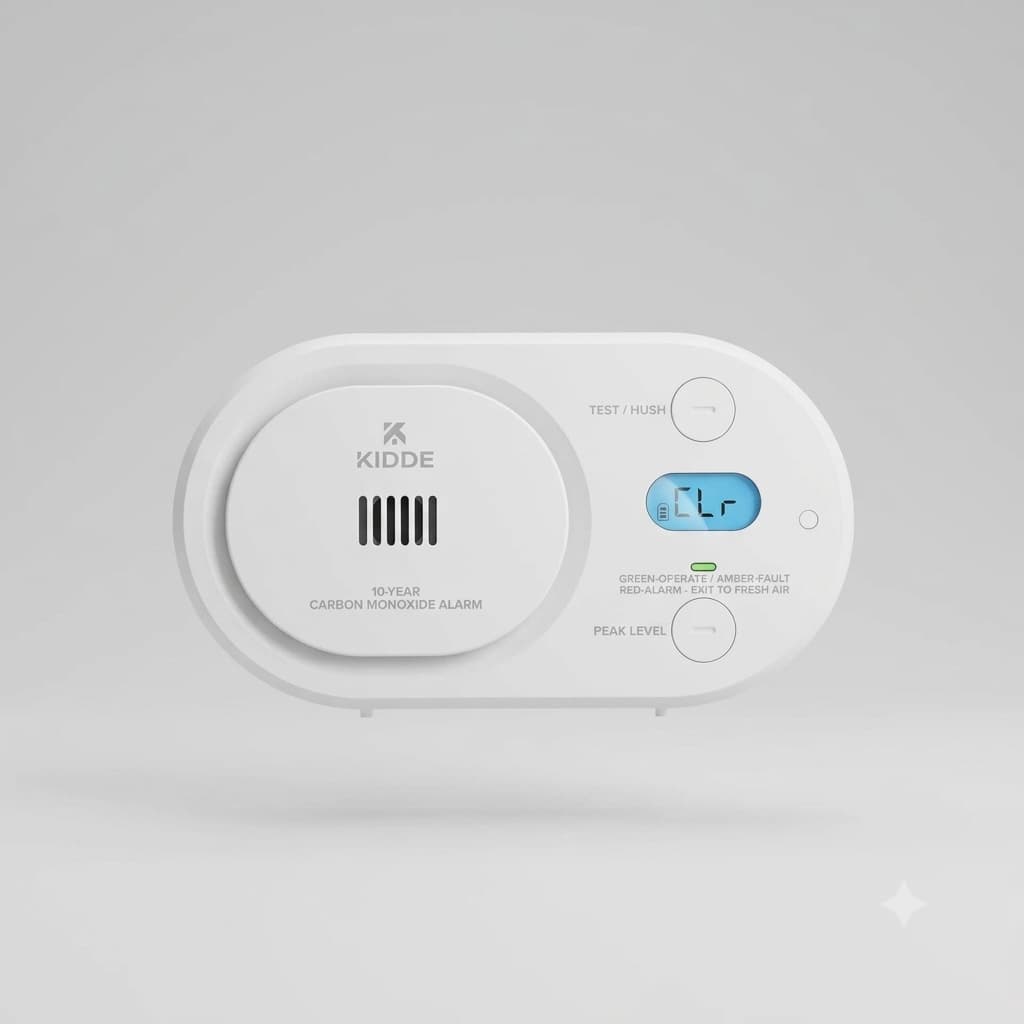
Two things make a cold house safer: a heater made for indoor use, and a carbon monoxide alarm beside it.
Evaluated for household use · Affiliate links disclosed
Grid-free heat for one room, used strictly by the manual's rules.
Why we chose it
Up to 9,000 BTU from a 1-pound cylinder, with an oxygen-depletion shutoff and a tip-over shutoff, built for emergency indoor heating under its manual's rules.
Evaluated for household use · Affiliate links disclosed
A battery CO alarm that works in an outage, with nothing to replace for 10 years.
Why we chose it
A sealed 10-year battery, an earlier alert at dangerous CO levels, a backlit display with a peak reading, and a 10-year warranty that runs to its replace-by date.
No. The CDC says never to heat your home with a gas oven, because it makes carbon monoxide. You can still cook on a gas stove with a window cracked; for more, see cooking safely in an outage.
Is a propane heater safe indoors?
Fuel-burning heaters are safest when they vent outside, per the CDC. If you use one made for indoor use, the EPA says to crack a window, keep doors to the rest of the house open, and never sleep in the room while it runs. Keep a working carbon monoxide alarm nearby.
How do I keep my pipes from freezing?
Let the faucets drip and open the cabinet doors under the sinks, per the CDC. If a pipe has already frozen, the Red Cross says to thaw it with a hair dryer, heating pad or hot wet towels, never a flame, and to keep the faucet open.
When should we leave the house?
When it keeps getting colder and you can't warm one room, go to a warming center, library or mall, per the Red Cross. Leave sooner if you have a baby, an older adult or someone on powered medical equipment. Your local news or your city's website will list warming centers.
How do I stay warm without electricity?
One small room, closed doors, blankets over the windows, loose layers, hats and warm drinks, per the CDC and the National Weather Service. For more ideas that work, see staying warm when it's freezing inside.
The calmest households aren't the most worried ones — they just have a plan. Once this passes, a few quiet minutes now saves a lot of stress next time.